7 Books Shaping My Imagination
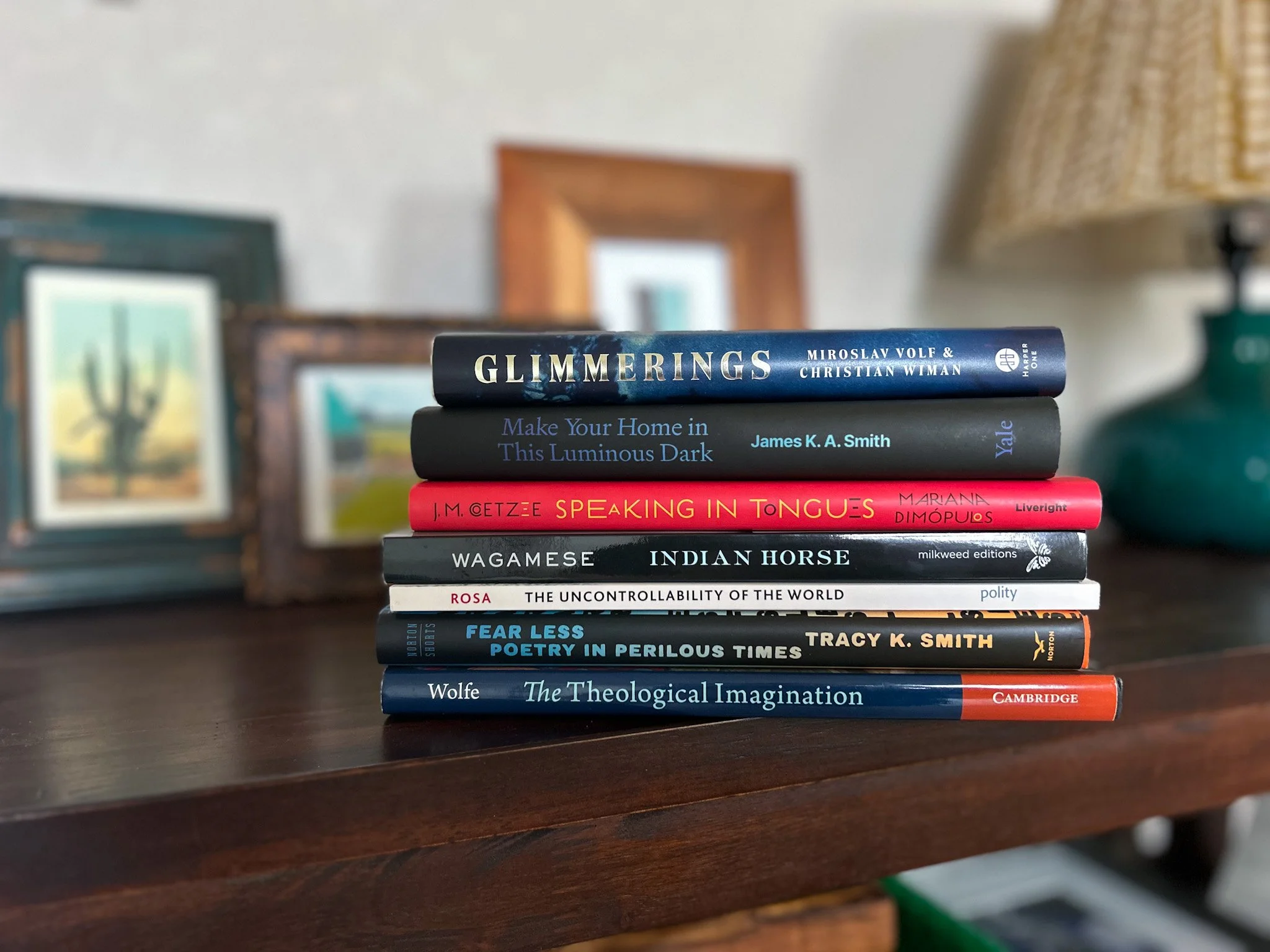
I have one or two essays underway on books, faith, and our life in the world—coming soon, Lord willing. In the meantime I thought I’d briefly note some of the books that have been shaping my imagination, as the hymn puts it, “for the living of these days.”
These books are prompting new curiosities and conversations, yielding fresh opportunities for what we at the day job have been known to call “subtle discovery.”
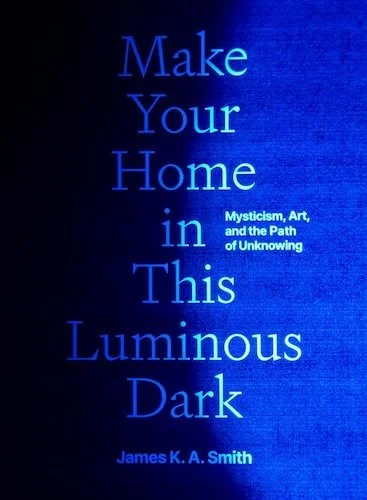
Make Your Home in This Luminous Dark: Mysticism, Art, and the Path of Unknowing (Yale)
by James K.A. Smith
I had the good fortune of reading an early version of the manuscript last year, so plenty of time to anticipate this generous, deeply personal exploration of philosophy, mysticism, and contemporary art—“about how to be when you don’t know”—from someone we consider a dear friend.
“We moderns have been hooked on knowing, addicted to comprehension. Maybe we have to experience the utter failure of knowledge in order to shake this modern prejudice and open our hands in the dark. Who knows? The risk, and possibility, is that someone reaches back.”
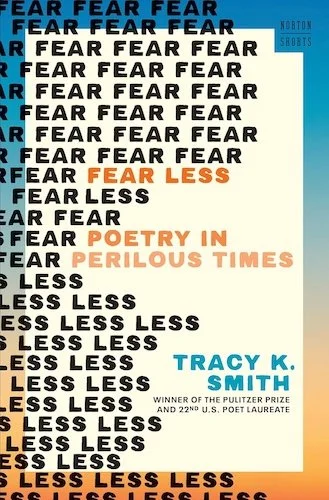
Fear Less: Poetry in Perilous Times(Norton)
by Tracy K. Smith
In this small but mighty work, the former Poet Laureate of the United States makes the case for poetry as one important antidote to fear and despair. What’s more, she seeks to help us overcome our fear of poetry itself as something mystifying, impenetrable, other.
“Poems exist in language, but their intention is to travel beyond the system of words and logic into systems of sound, sensation, memory, imagination, emotion, knowledge, and ultimately into insight. If you hold this view in mind—that poems use words but are not about words, the same way cars use fuel or electricity but are about something much more far-reaching—then you can feel confident that whoever you are and whatever you care about, you are already perfectly equipped to experience and even to claim a relationship to the art form.”
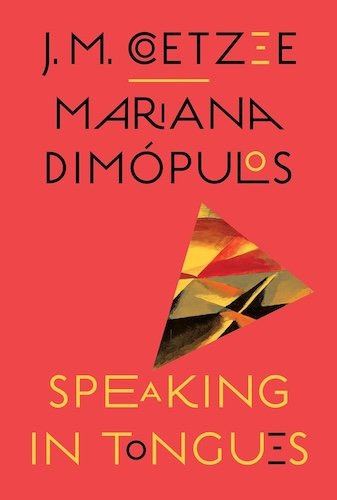
Speaking in Tongues(Liveright)
by J.M. Coetzee & Mariana Dimópulos
This fascinating book takes the form of a “conversation” between a South African novelist and an Argentine translator. In it, Dimópulos and Coetzee compare notes on the power and ambiguity of language, and how works of translation always entail risk.
“Writing this work showed that common assumptions, such as what our mother tongue is, and forgotten premises, for example that natural languages determine our view of the world, may be worth being re-interrogated. Looked at with some persistence, even the use of the most simple of words such as bread or rabbit might turn out to be mysterious to attentive eyes.”
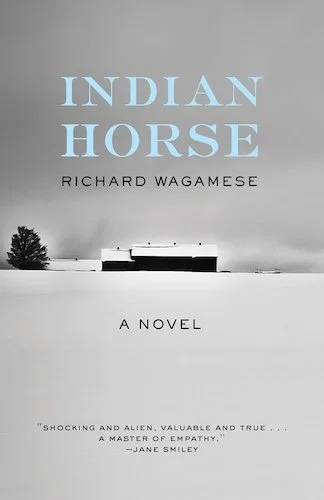
Indian Horse: A Novel (Milkweed)
by Richard Wagamese
Before it was assigned to us as part of my doctoral program, I’d never heard of this book—or of its author. Now I can’t stop thinking about it. Astonishing through and through, but not for the faint of heart.
“We were hockey gypsies, heading down another gravel road every weekend, plowing into the heart of that magnificent northern landscape. We never gave a thought to being deprived as we travelled, to being shut out of the regular league system. We never gave a thought to being Indian. Different. We only thought of the game and the brotherhood that bound us together off the ice, in the van, on the plank floors of reservation houses, in the truck stop diners where if we’d won we had a little to splurge on a burger and soup before we hit the road again. Small joys. All of them tied together, entwined to form an experience we would not have traded for any other. We were a league of nomads, mad for the game, mad for the road, mad for ice and snow, an Arctic wind on our faces and a frozen puck on the blade of our sticks.”
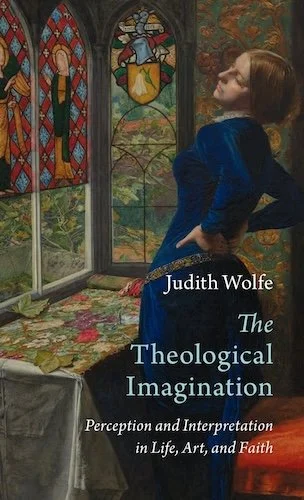
The Theological Imagination: Perception and Interpretation in Life, Art, and Faith (Cambridge)
by Judith Wolfe
I learned about this one from my friend Karen Stiller who thought I’d like it. She knows me well. Consider, as one rather isolated example, this helpful distinction between information, knowledge, and conspiracy theories:
Information is seen here as a seemingly random constellation of dots. Knowledge draws straight lines between dots; not every dot connects to every other dot, but every dot does connect to at least one other dot. Conspiracy theories, meanwhile, connect certain dots to others, yielding an apparently predetermined shape, while ignoring just as many data points as they choose to acknowledge.
“What motivates this book is the dual fact that imagination is both constitutive of life in the world and irreducibly risky. We cannot but construct what we see, and this construction is always fraught with the danger of error, overreach, avoidance, delusion. Stanley Cavell says that ‘the dangers of fraudulence, and of trust, are essential to the experience of art’. They are also essential to the experience of life.”
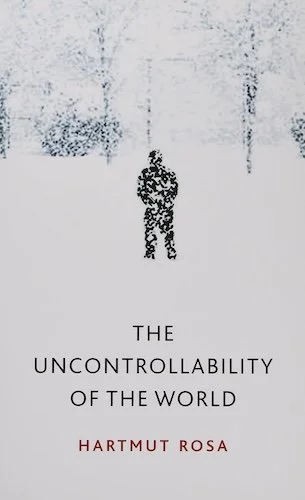
The Uncontrollability of the World (Polity)
by Hartmut Rosa
Have you ever had the experience of hearing about a book and an author for the first time, and then subsequently hearing about this author and this book about a hundred more times, seemingly all at once? That’s been Rosa and Uncontrollability for me this year.
“The driving cultural force of that form of life we call “modern” is the idea, the hope and desire, that we can make the world controllable. Yet it is only in encountering the uncontrollable that we really experience the world. Only then do we feel touched, moved, alive. A world that is fully known, in which everything has been planned and mastered, would be a dead world. This is no metaphysical insight, but an everyday experience. Our lives unfold as the interplay between what we can control and that which remains outside our control, yet “concerns us” in some way. Life happens, as it were, on the borderline.”
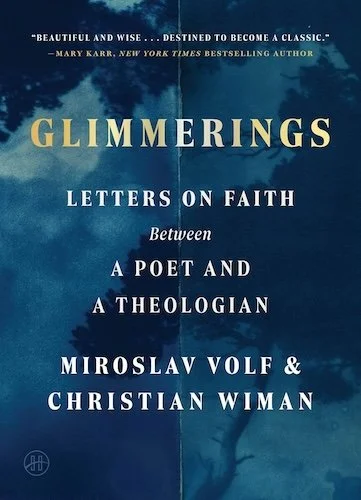
Glimmerings: Letters on Faith Between a Poet and a Theologian (HarperOne)
by Miroslav Volf and Christian Wiman
“Glimmerings are what the soul’s composed of.” That’s Seamus Heaney, in the epigraph to this epistolary book between a pair of literary and theological heavyweights. At times these colleagues (who are also friends) venture into some strange territory that will make some of us more than a little nervous. But then there are also dazzling passages—glimmerings, I suppose—like this from Volf:
“As a life of love, Christian life is often marked by suffering. Love’s suffering is a means; Love’s dance is the goal. That goal is a world of love, a community of creatures rightly related to God and one another. This kind of world, fully itself by being indwelled by God, is our final end.”