My Favorite Books of 2025
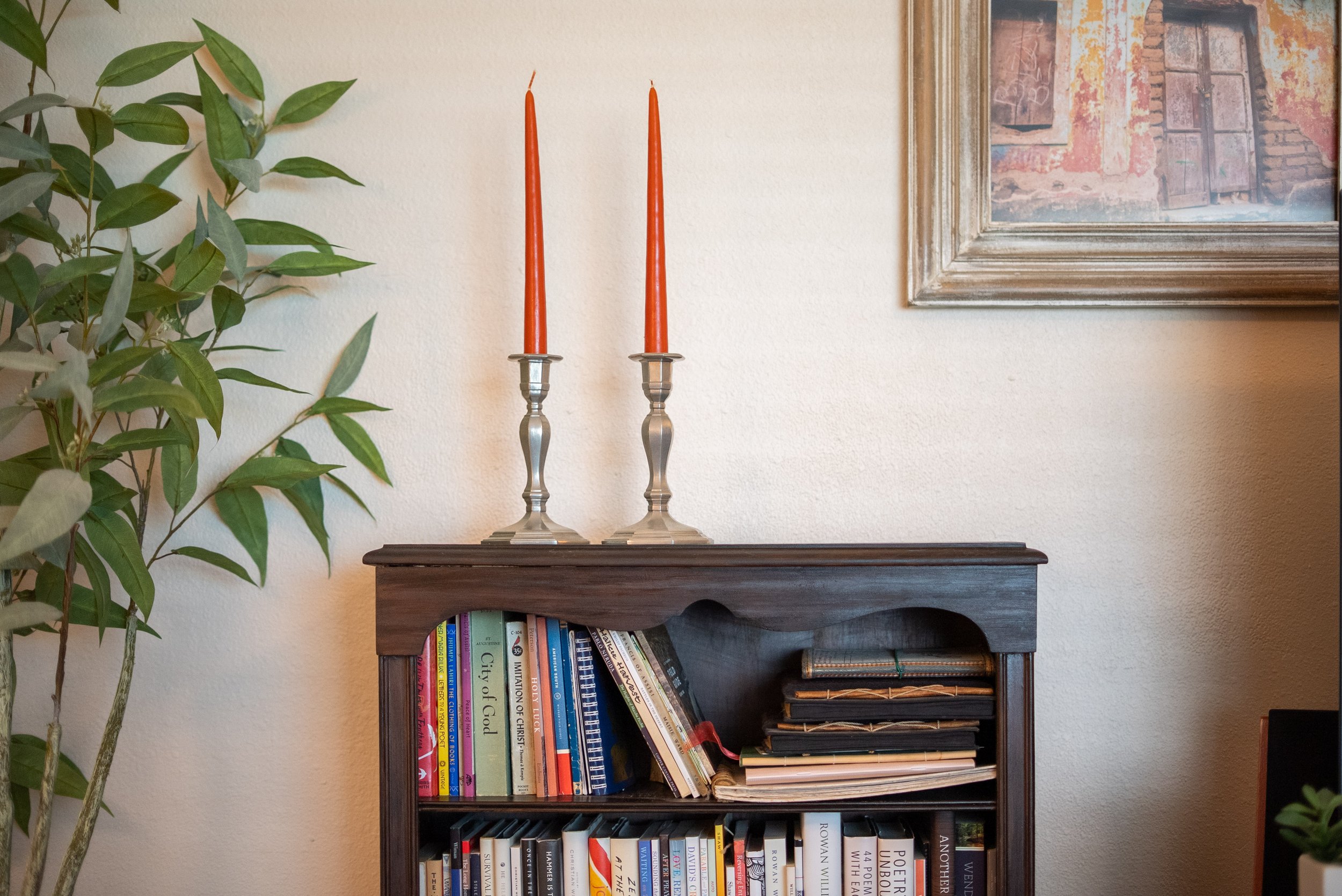
Here they are, friends, my favorite books of the year. They’re grouped (loosely) by genre or theme, but appear in no particular order except, as usual, I saved my very favorite for last.
Thanks for another wonderful year of reading books and reflecting on them together. Advent peace to you and yours.
Tim
A hefty history of a people and a place:
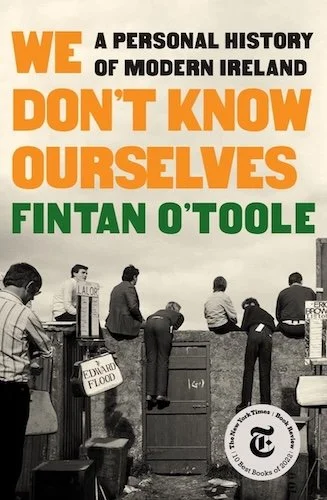
We Don’t Know Ourselves: A Personal History of Modern Ireland (Liveright)
by Fintan O’Toole
There’s something to be said for histories which strive for “objectivity.” But this book is proof that unapologetically personal histories can tap into something universal as well. In 600-something pages, O’Toole tells the story of how in the course of his own lifetime Ireland has changed, weaving newsworthy events with his own recollections. I mostly listened to this one, in no small part because of Aidan Kelly’s pitch-perfect narration.
It was the silences that made [TV personality] Gay Byrne what he became in Ireland: the silences of the breakfast table, the silences around the fireside, the silences on the pillow. Without them he would have been what he so patently was—a superbly professional broadcaster, confident, adaptable, quick thinking and fast talking—but nothing more. With them, he was something else altogether: the voice in which the unspoken could be articulated, the man who gave permission for certain subjects to be discussed. His was the tone—calm, seductive and passionless—in which things that were otherwise unbearable could be listened to.
A refreshingly original work of literary nonfiction:
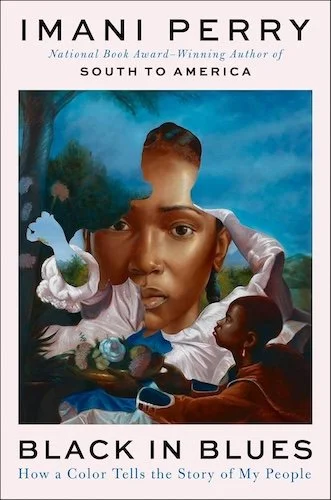
Black in Blues: How a Color Tells the Story of My People (Ecco)
by Imani Perry
I keep thinking about this book: expansive, incisive, original. I’m now eager to read more of Perry’s other work as well.
The things that Black people found out by playing the blues are now recognized by the very society that once said they were subhuman. Psychologists finally understand that live music, laughter, prayer, friendship, ritual, sweet love, are the best parts of life. Back then, the people in the jukes were told by strivers and statesmen both that they were squandering their years with joy. I’m glad my folks knew and did better. What could be wrong with deciding to live fully despite the obstacles? What better legacy to move through hard years?
A concise and winsome apologetic:
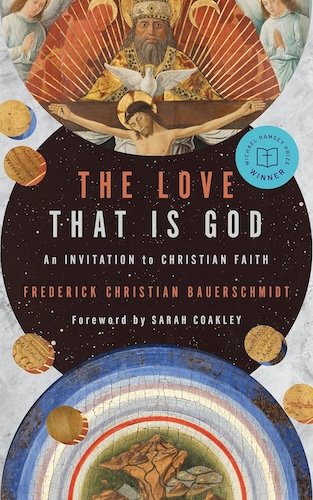
The Love That Is God: An Invitation to Christian Faith (Eerdmans)
by Frederick Christian Bauerschmidt
Bauerschmidt knows his Bible and his theology. But in this book you won’t find a precise theory of the atonement, a specific view of ecclesiology, or an unambiguous timeline of “the last things.” Nor is Bauerschmidt interested in resolving once and for all the problem of evil. Rather, he invites us—whatever our questions, whatever our hungers, whatever our fears—to taste and see that the Lord is good. And then, whatever else we do, not to keep the abundance to ourselves.
What I offer here is simply one attempt to speak of Christian faith to people of my time and place in a way that might convey some of the attractive force of things that lie at the heart of the life and teachings of Jesus. In particular, I wish to show how the claim that the love that is God is crucified love offers us a way to understand how the joys and sorrows of our existence can be enfolded within the eternal love that is our source.
Read more here.
It lives up to the considerable hype, somehow:
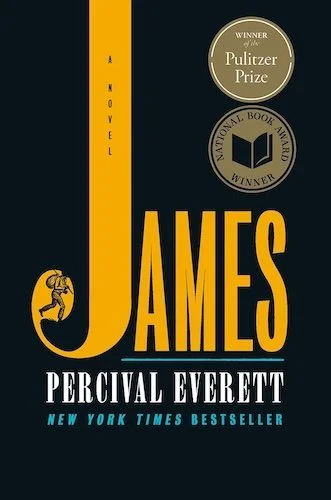
James: A Novel (Doubleday)
by Percival Everett
Smart. Biting. Playful. Prophetic. The hype is 100% warranted.
I am called Jim. I have yet to choose a name.
In the religious preachings of my white captors I am a victim of the Curse of Ham. The white so-called masters cannot embrace their cruelty and greed, but must look to that lying Dominican friar for religious justification. But I will not let this condition define me. I will not let myself, my mind, drown in fear and outrage. I will be outraged as a matter of course. But my interest is in how these marks that I am scratching on this page can mean anything at all. If they can have meaning, then life can have meaning, then I can have meaning.
A bonkers novel that worked for me, but may not be for everyone:
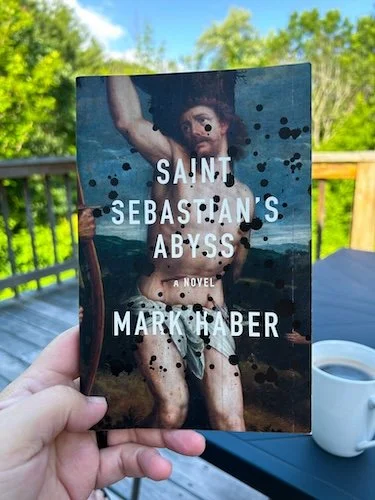
Saint Sebastian’s Abyss: A Novel (Coffee House Press)
by Mark Haber
I started reading this on a plane en route to a family reunion on the east coast. Maybe it was the altitude, but as Katie can attest, I grinned and giggled basically the whole way to Boston. A preposterous tale of two besties who make a name for themselves as leading art critics obsessed with a single obscure work of art, an obsession which ultimately drives a wedge between them, culminating in a “relatively short” nine-page deathbed email. Be forewarned: absurdities abound.
. . . I had agreed with Schmidt countless times when he asserted that art had died in 1906 and I had also agreed with Schmidt countless times when he claimed that artists were an extinct species, but, in my defense, did that mean we were correct? Couldn’t someone feel that art hadn’t died in 1906, even if we felt and believed it had? Couldn’t someone, however stupid and loathsome they might be, feel touched by something we deemed not art or even trash? We were right, of course, but wasn’t there room for those who were wrong?
Artful conversations with a good friend:
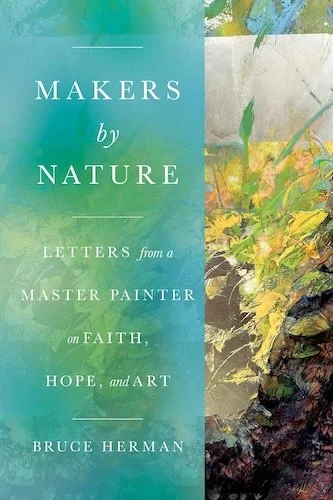
Makers by Nature: Letters from a Master Painter on Faith, Hope, and Art (IVP Academic)
by Bruce Herman
I’m glad Herman chose to write this kind of book, in what he calls the “old-fashioned genre of epistolary essay.” The letters themselves are “imaginary,” but written to actual people “with whom I have had substantive discussions (and real correspondence) over several years, in some cases covering decades.” Had he been persuaded to write a more traditional book about the intersections of faith and art, we certainly would have learned a lot and found some measure of inspiration. But we may have lost Bruce. We may not have had this conversation with a trusted friend.
We’re invited into the mystery of being a maker, a participant in the divine outpouring of grace and beauty and visual extravagance. And that, I think, is the first thing we can notice about God’s making—that it is infinitely extravagant, profligate beyond any human capacity to comprehend. We cannot comprehend God’s creativity but we can sing about it, write poems and psalms about it, make art about it.
Read more here.
Both a book and a mirror:
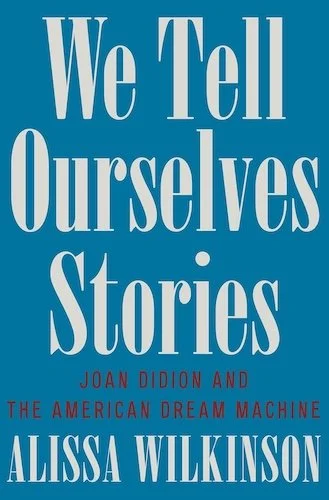
We Tell Ourselves Stories: Joan Didion and the American Dream Machine (Liveright)
by Alissa Wilkinson
While she published five novels and multiple memoirs, for many of us our first encounters with Didion came through her essays. With her husband John Gregory Dunne, she also spent much of the 1970s and some of the ’80s in the movie business, writing screenplays including The Panic in Needle Park and A Star Is Born—a significant body of work I didn’t know as much about. So I’m glad that Wilkinson, a film critic at the New York Times (by way of Christianity Today and Vox), chose as her interpretive lens “the story of Hollywood, and an America shaped by Hollywood, and a writer shaped by both.”
Similar to the movies and the industry around them, Didion’s writing and her persona formed a mirror to reflect our own anxieties back to us, filtered through her anxieties. In our mobile, pluralistic world, stories collide and coexist. People interpret the same events in radically different ways. They read meaning where there is none or, sometimes, ignore meaning that doesn’t fit into the story they’re telling themselves. Facts are made to fit the narrative, not the other way around.
Read more here.
A woefully overdue new favorite:
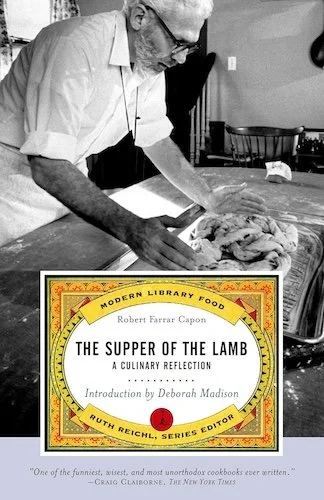
The Supper of the Lamb: A Culinary Reflection (Modern Library)
by Robert Farrar Capon
I don’t know how I didn’t read it sooner, especially since it’s one of Katie’s all-time favs. An Episcopal priest who writes almost as eloquently about an onion as he does about the Trinity? Yep, it’s a good one.
The world exists, not for what it means but for what it is. The purpose of mushrooms is to be mushrooms; wine is in order to wine: Things are precious before they are contributory. It is a false piety that walks through creation looking only for lessons which can be applied somewhere else. To be sure, God remains the greatest good, but, for all that, the world is still good in itself. Indeed, since He does not need it, its whole reason for being must lie in its own goodness; He has no use for it; only delight.
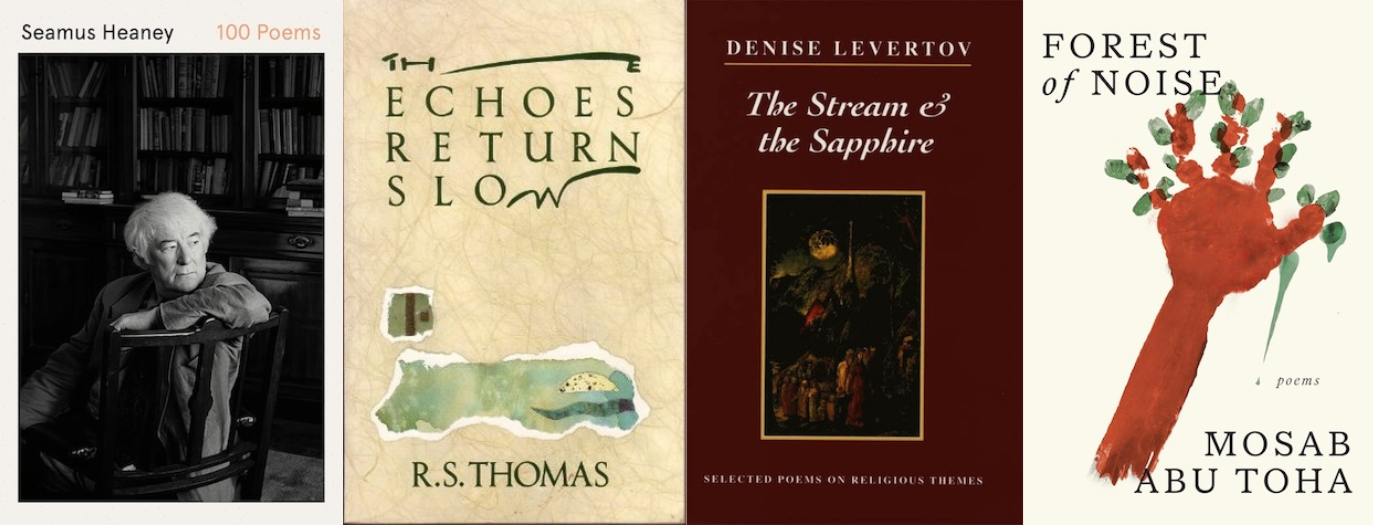
Four books of poetry with staying power:
100 Poems (Farrar, Straus and Giroux) by Seamus Heaney
The Echoes Return Slow (Bloodaxe) by R.S. Thomas
The Stream & the Sapphire (New Directions) by Denise Levertov
Forest of Noise (Knopf) by Mosab Abu Toha
My very favorite book of the year:
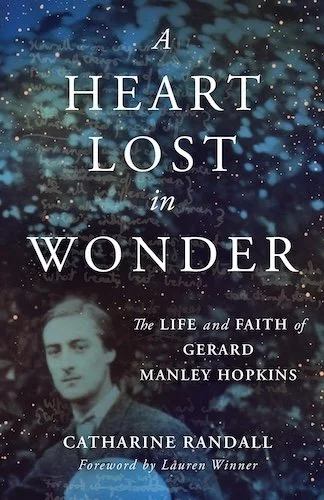
A Heart Lost in Wonder: The Life and Faith of Gerard Manley Hopkins (Eerdmans)
by Catharine Randall
I read this one in anticipation of our October literary pilgrimage that would take us, among other places, to St. Beuno’s Jesuit Spirituality Centre in North Wales, where Hopkins received his theological training and where he composed The Wreck of the Deutschland, one of his major poems. Hopkins’ poetry isn’t the easiest thing in the world to read, so before really immersing myself in his work I wanted to get to know the poet himself. Randall’s slim book— “an interpretive biography, a life viewed through the prism of theology”—blew me away. No other book captured my attention this year quite the way this one did.
It just may be that our present day and age is, in fact, Gerard’s best audience. Perhaps we are those with eyes to see and ears to hear, who will accompany Gerard further on his road. In a strange, paradoxical way that Gerard himself surely could never have anticipated, readers of the present day are often people more willing to perceive divinity in the numinous, in nature, in art.
Want even more?? I have a list of all the books I read this year on the intentionally semi-hidden Reading page. Favorites are given the star treatment. Ones I’ve written about are underlined and linked.