Saying Goodbye to a Good House
On New Year’s Eve—after another day of bankers boxes, far too many decisions, and the umpteenth thrift store run—we decided to stay in. We ate takeout pizza on paper plates and rewatched The Holdovers, that quintessential film about holiday seasons marked by weird circumstances.
In the driveway next door, our neighbors were setting what must have been hundreds of dollars on fire: an endless barrage of pops, booms, and bangs. We put Gus to bed early, safe in his closet cave where he’s off duty and free to conk out. Breaking with tradition, we missed the Times Square ball drop and “Auld Lang Syne.” Without a prayer of making it to midnight Mountain Standard Time, we slumped into bed. We were slumping, frankly, into the new year.
The next day we’d go stay with Katie’s parents, and the day after that, a pair of movers named Dakota and Church would transfer all our earthly belongings into a trailer parked out front. Then we would make our way to Texas and the new life awaiting us there. But in the waning waking moments of 2025—before one final night’s sleep in this, our first home—I picked up James K.A. Smith’s How to Inhabit Time (Brazos), a book I first read (and loved) back in 2022.
In a chapter called “Embracing the Ephemeral,”¹ Smith recalls his family’s move from their own first home ten years earlier and how the experience coincided, unexpectedly, with “a season of debilitating depression.” Like us, the Smiths’ circumstances were fortunate. They chose to make the move, as we’re doing now—a privilege through and through. Their move was accompanied by hopes for their family and for those to whom they would show hospitality. Their move was a good thing. And yet, as Smith puts it, “moving houses tore open a wound.”
“Having lived through a traumatic displacement in my childhood, my body kept the score,” he writes. “I hadn’t yet learned that not all change is loss, and not all loss is tragic. I hadn’t yet learned the art of losing.”
+ + +
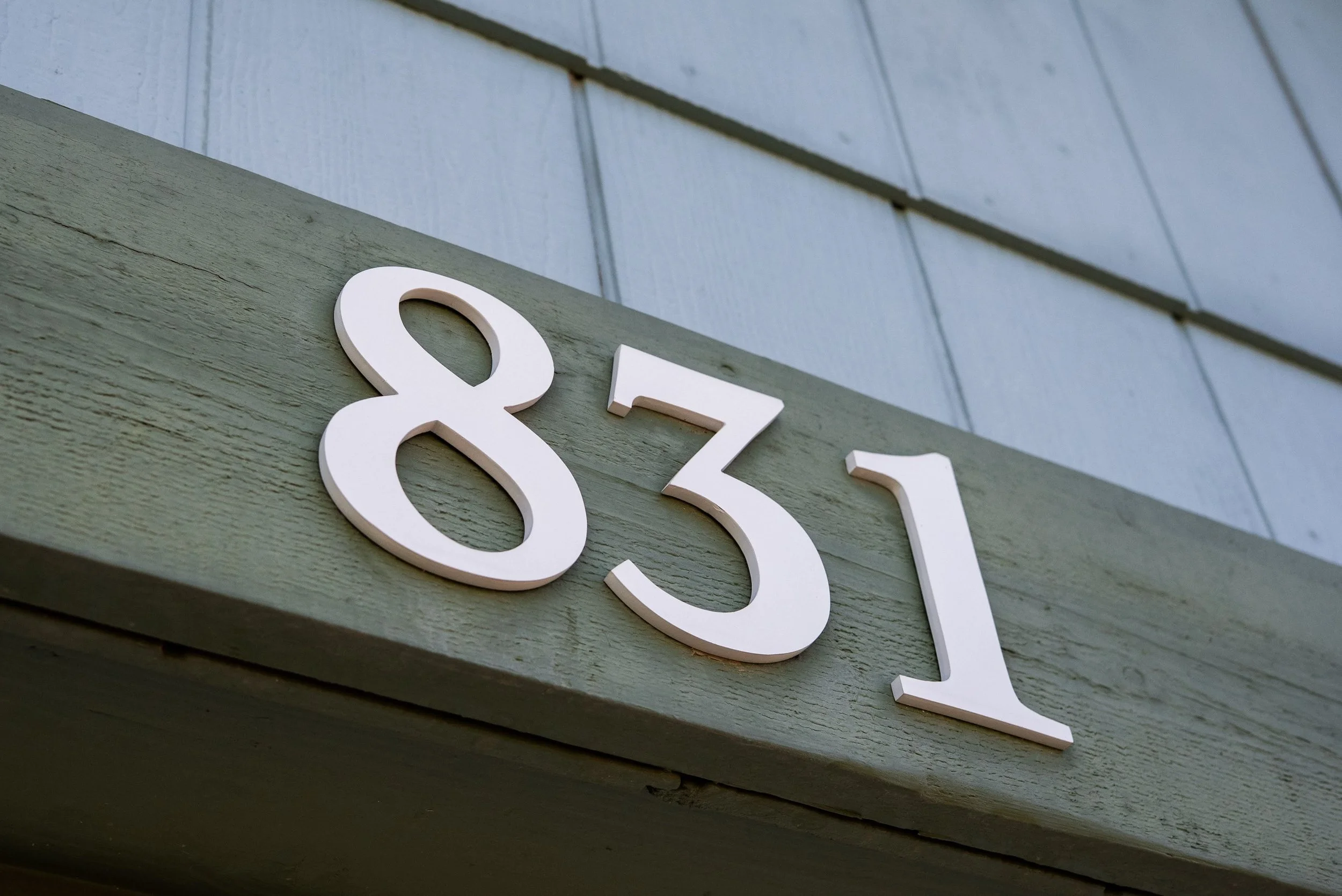
In a recent reflective moment, it dawned on me that having lived at 831 East Divot Drive for twelve and a half years, this is by far the longest I’ve lived in any one place. A quick and undoubtedly partial inventory of the houses I’ve called home yielded 20 places dating back to my earliest years in Guatemala. Which means I lived in at least 19 distinct residences, all before turning 30.
That’s a lot of homes. A lot of transitions and goodbyes. A lot of stuff to lug around, if you know what I mean.
The circumstances of my childhood moves tended to be different from the particularly traumatic move Smith lived through as a boy. And I suspect my experience of this move we’re navigating as I write may differ from his own later move as well. But a new house is a big deal. So I want to pay attentionto what’s going on inside and around me, today and next week and six months from now. I don’t want to sleepwalk through it.
As Smith writes in the concluding pages of the chapter, it was his wife Deanna who finally helped him connect the dots between moving houses and his own “not-so-subtle art of imploding.” What’s more, she found a wonderful way of naming the gifts and graces of their family’s home before the house changed hands and filled up with someone else’s stories:
Deanna, I now see, was inviting us to practice a different art. On the day we handed over the keys to a new owner, Deanna guided all of us, the entire family, room by room, to remember with gratitude, to recall shared delights and struggles, to relive the parties and sleepovers. Room by room we practiced an art of losing that received without grasping.
Inspired by our friends Deanna and Jamie, before walking out the door we did the same. And then—Marilyn McEntyre, this one’s for you—I made a list.
What To Remember When Saying Goodbye to a Good House
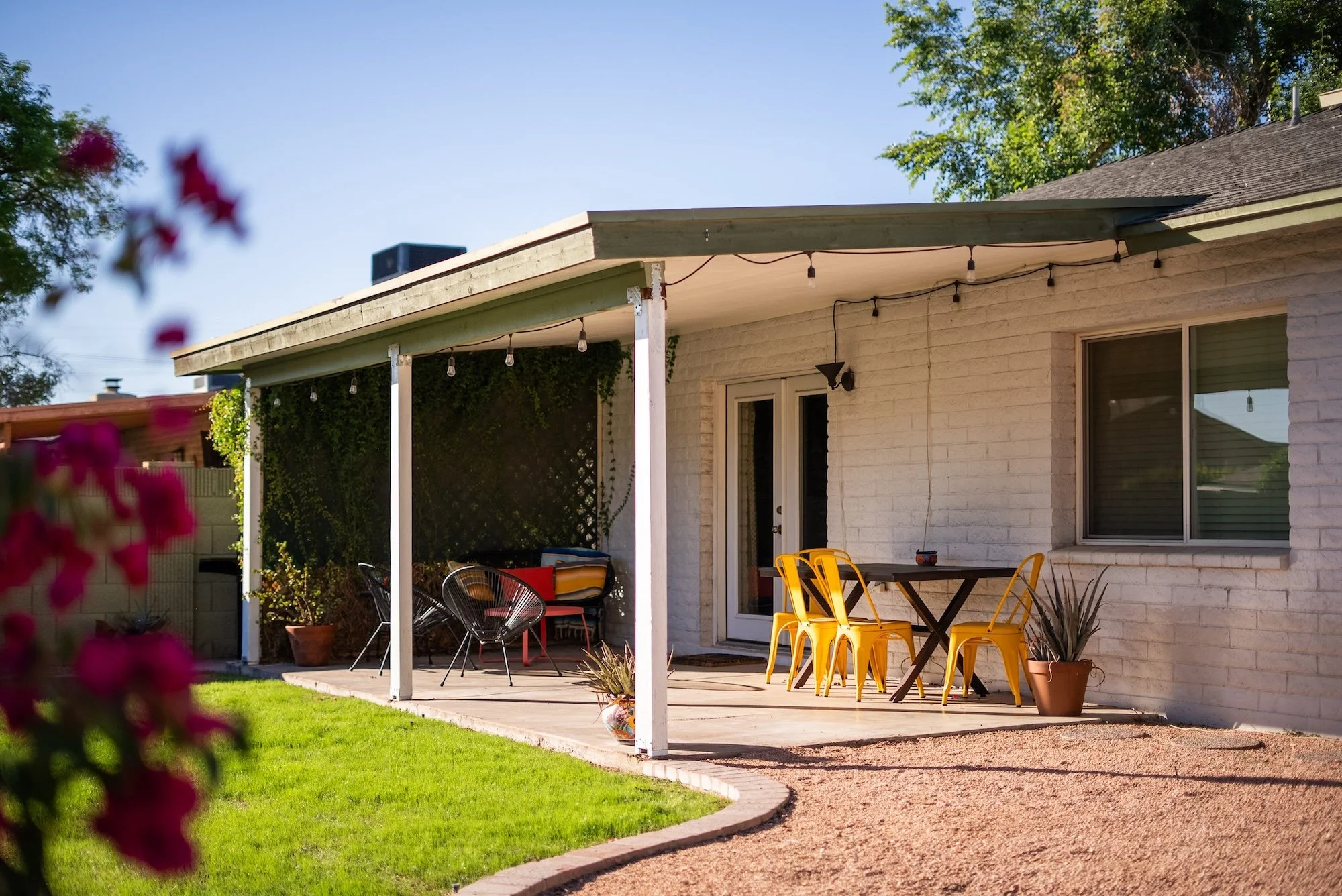
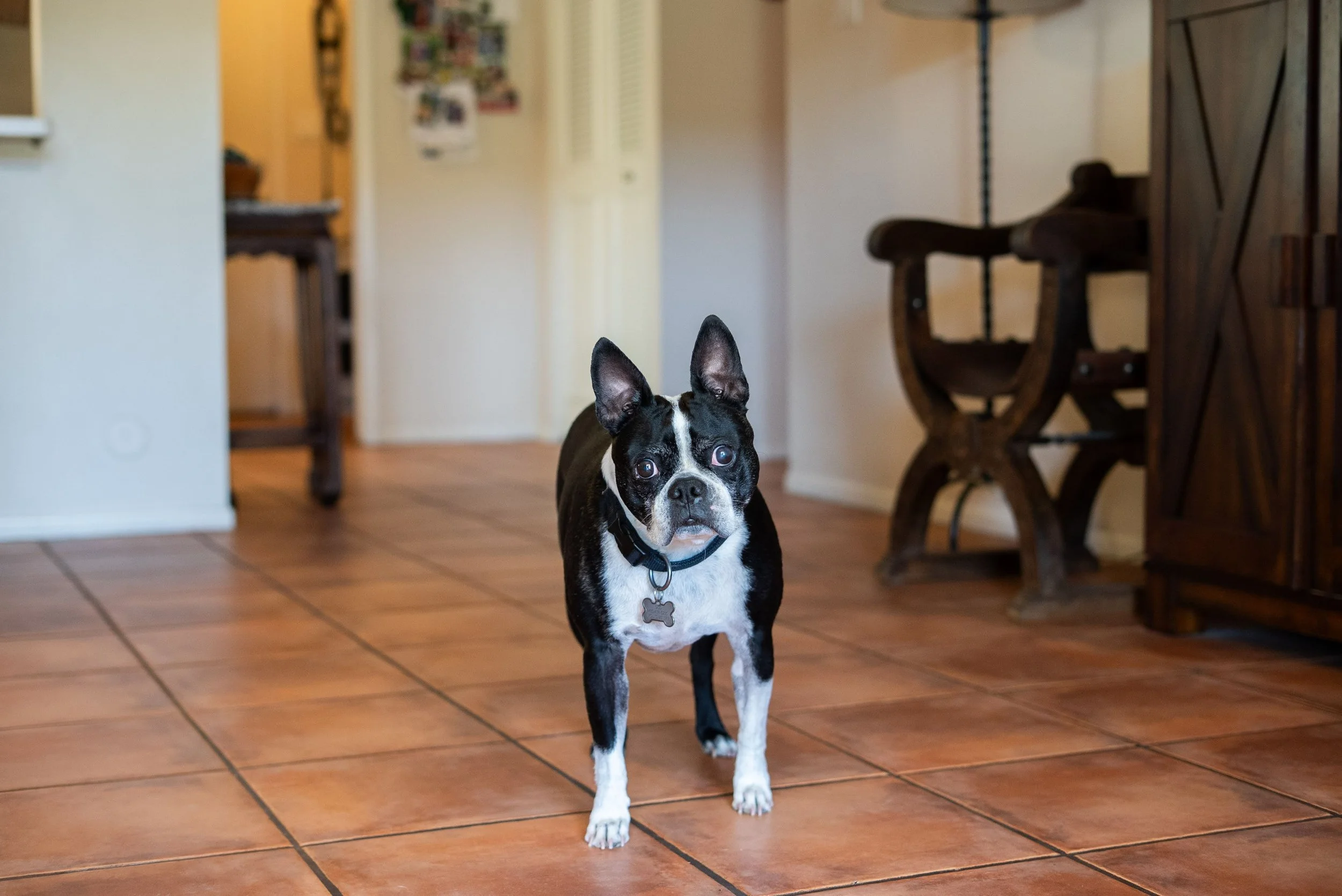
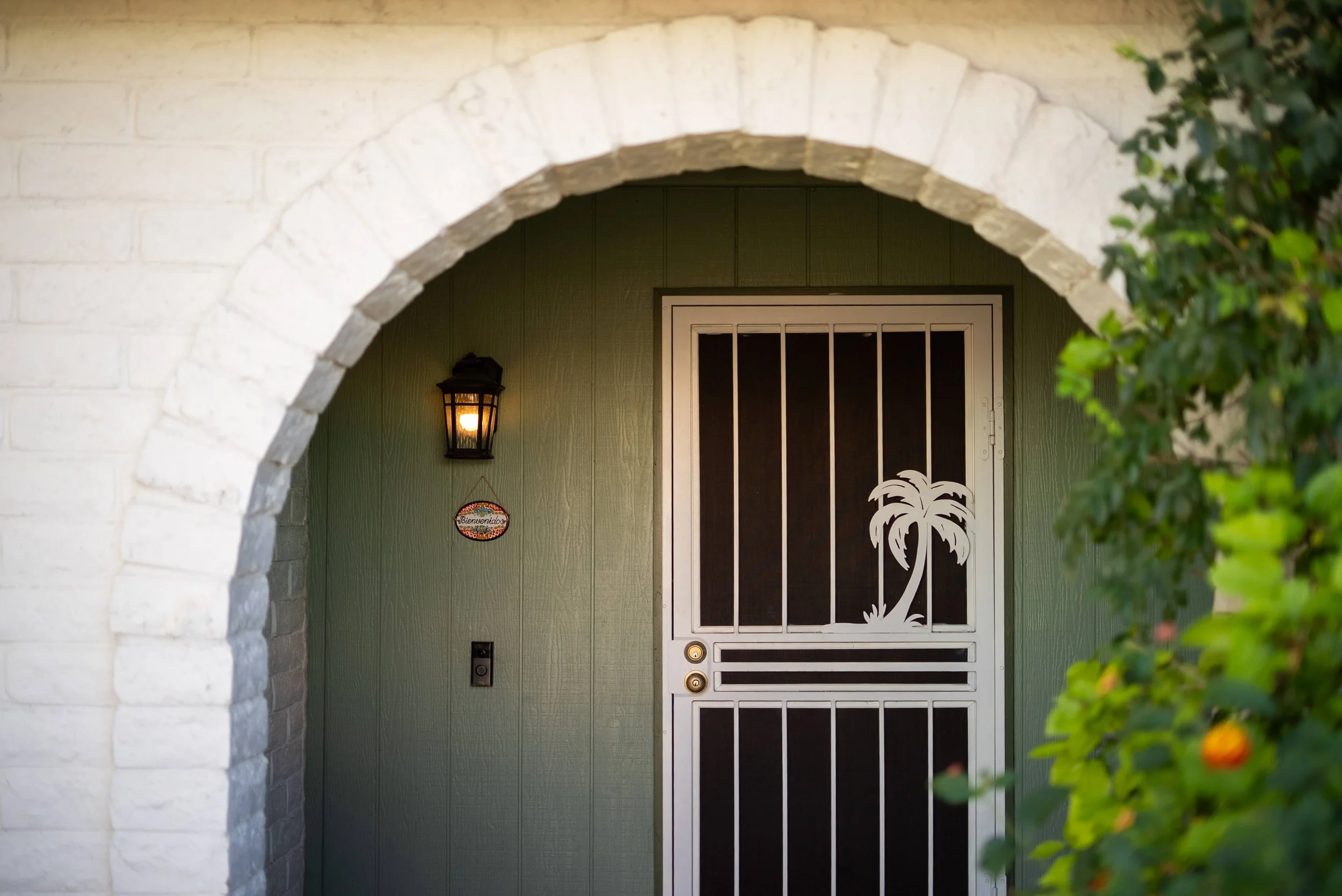
Taking it all in for the first time: the saltillo tile, the quirky-ass arches, the sunken living room, the forty-year-old Chinese Elms
Making the previous owners an offer they very much could have refused, but didn’t, gracias a Dios
Joy-stricken panic when we were handed the keys and learned houses don’t come with instruction manuals
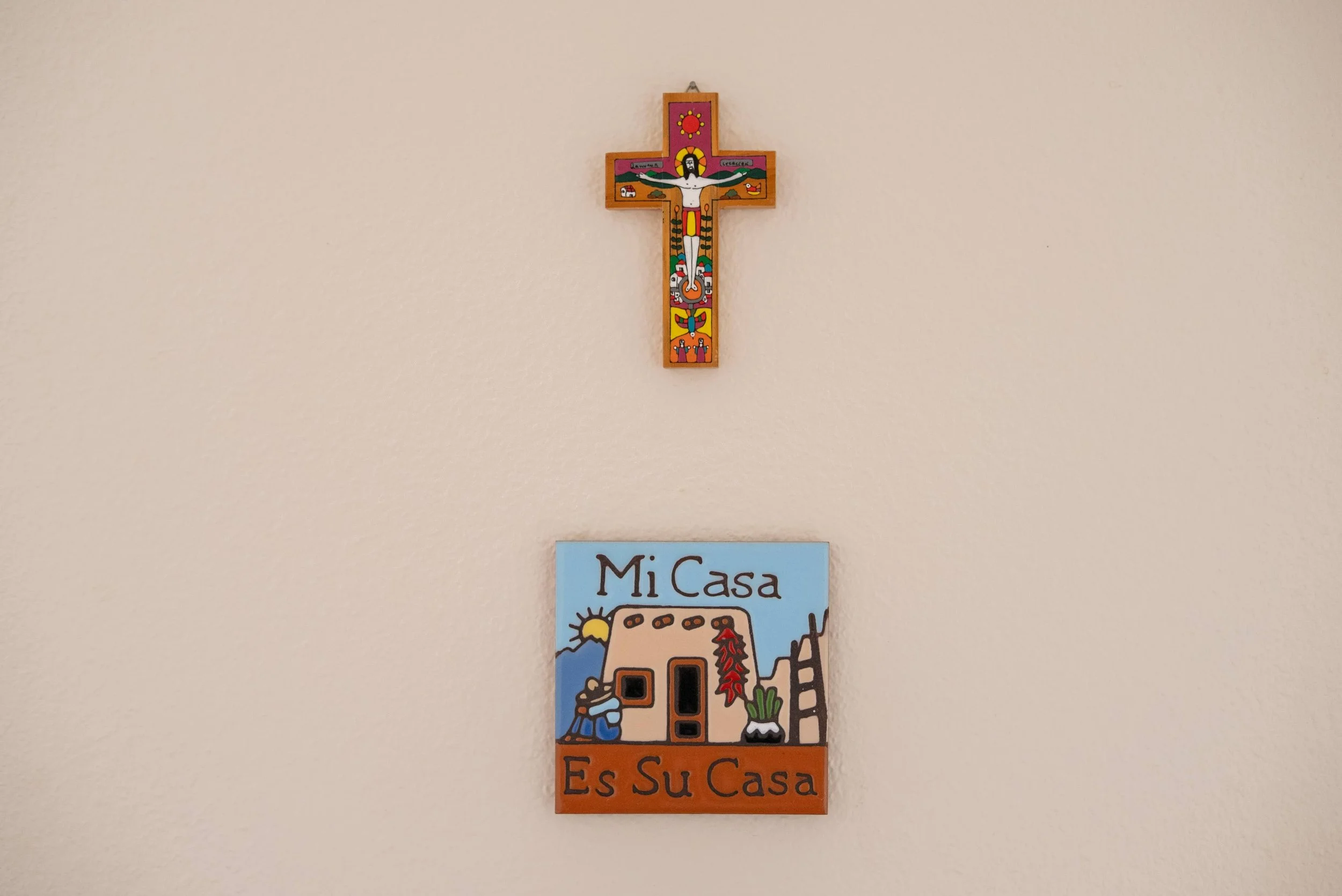
When the priest said “Peace be to this house” and went from room to room, sprinkling water, making the sign of the cross
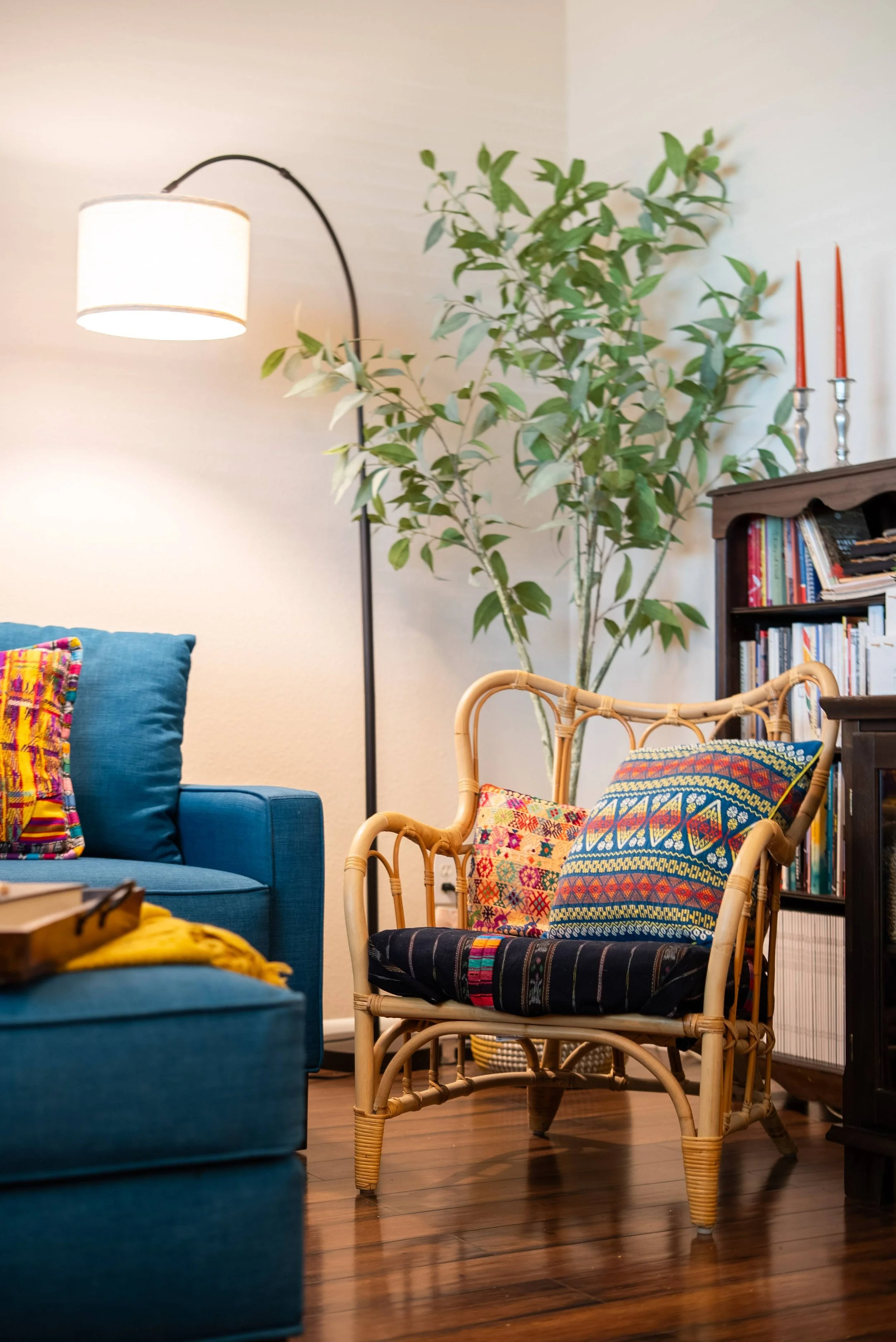
Getting bright blue couches, preposterously, and having zero regrets
Themed movie-and-dinner Fridays, like crazy alfredo for Goodfellas, tuna tostadas² for Roma, and—God help us—beef bulgogi for Okja
All the friends, family, and literal strangers we’ve hosted for dinners and overnights and weeks at a time, and how an uncanny number of them told us, unprompted, how peaceful the place made them feel, and how happy that made us
Watching Coco with Angie and Elsa, asylum seekers from a fearful land we love fiercely
Installing a Little Free Library and marveling at how frequently it’s used (while also routinely sending Jehovah’s Witnesses tracts, AARP magazines, and Left Behind volumes to the recycling bin)
Liturgical parties for under-appreciated occasions like Epiphany and Pentecost
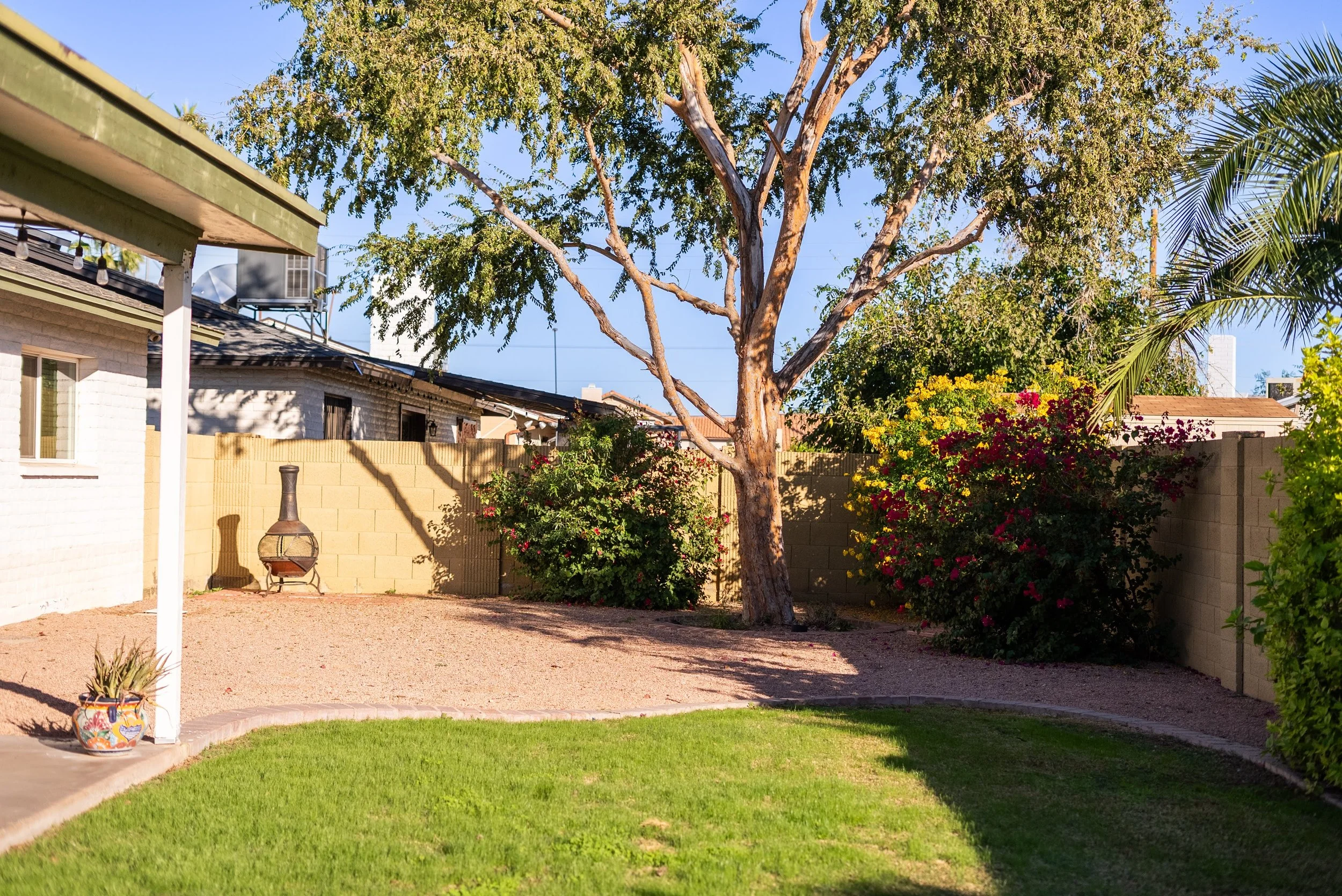
Bringing Gus into our lives and rediscovering the joys of our backyard
Daily walks on the canal path
The sounds and the silences
When a guest, not intending to offend, said, “It’s a good little starter house,” and how we keep invoking it as our own shared joke
Coming home from a long trip to Guatemala and finding our back doors had been kicked in and Katie’s jewelry—much of it inherited and irreplaceable—was gone
When a nasty storm tossed one of our towering elms across the yard and into the neighbors’ pool, and how it gave us an occasion to meet them
How we briefly considered moving to a neighborhood 15 minutes away, but never did
Being suddenly at home all day, every day, amidst everything “unprecedented”
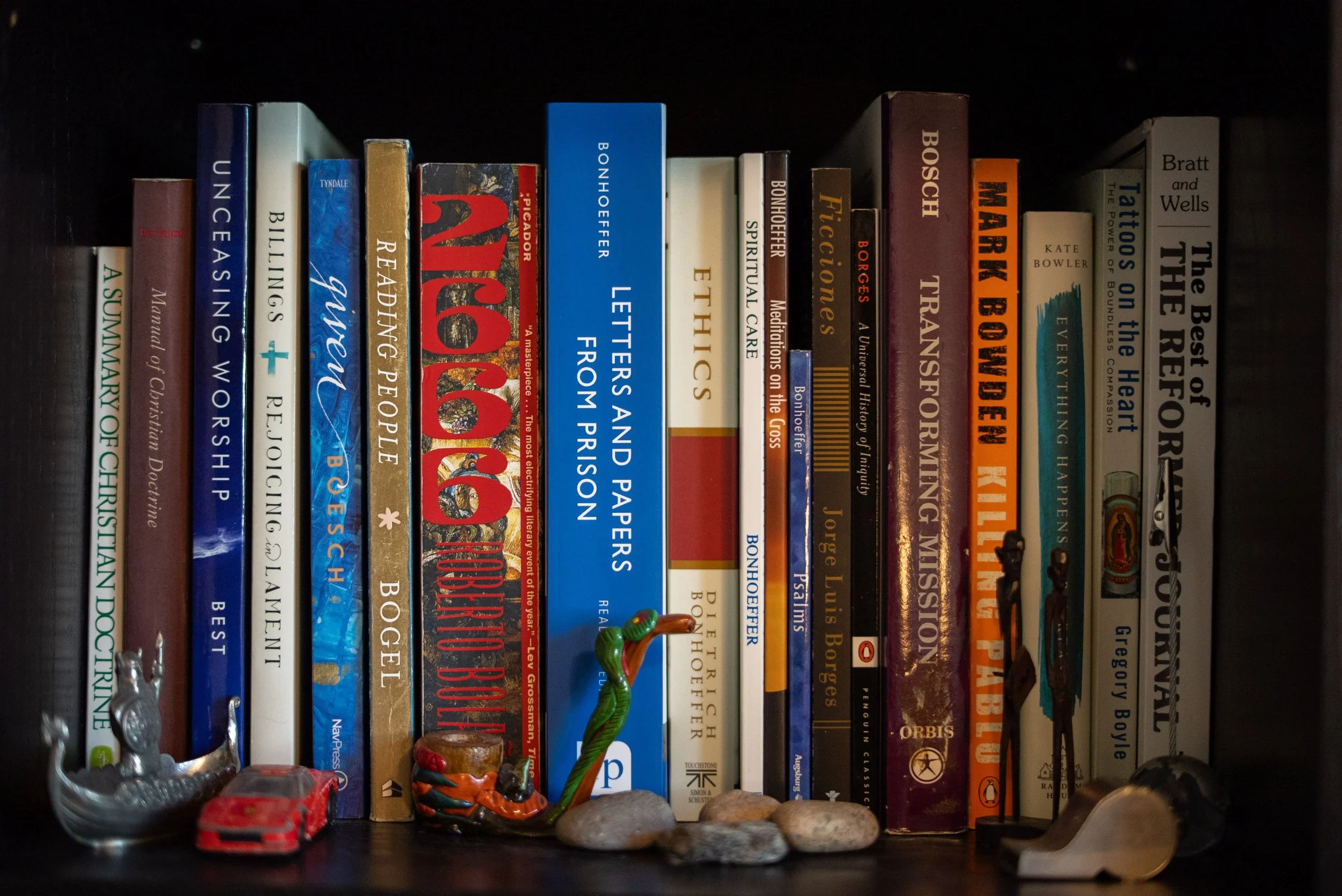
When we got new bookshelves in the living room and it felt like being surrounded by friends
All the times we said, turning onto our street after an evening out, “Think our puppy missed us?”
All the times we said, returning from trips, “It’s good to be home”
When we clinked glasses of B&B, toasting the good news that would also mean leaving this home, a place of deep joy, real pain, time-tested love.
Notes
¹ Thanks to my uncle, Larry Thomas, for recently texting us about this part of the book and encouraging us to revisit it.
² Gabriela Cámara’s tuna tostadas at Contramar in Mexico City have forever set the bar. For the uninitiated, Netflix has a lovely short film about Cámara and her restaurants.
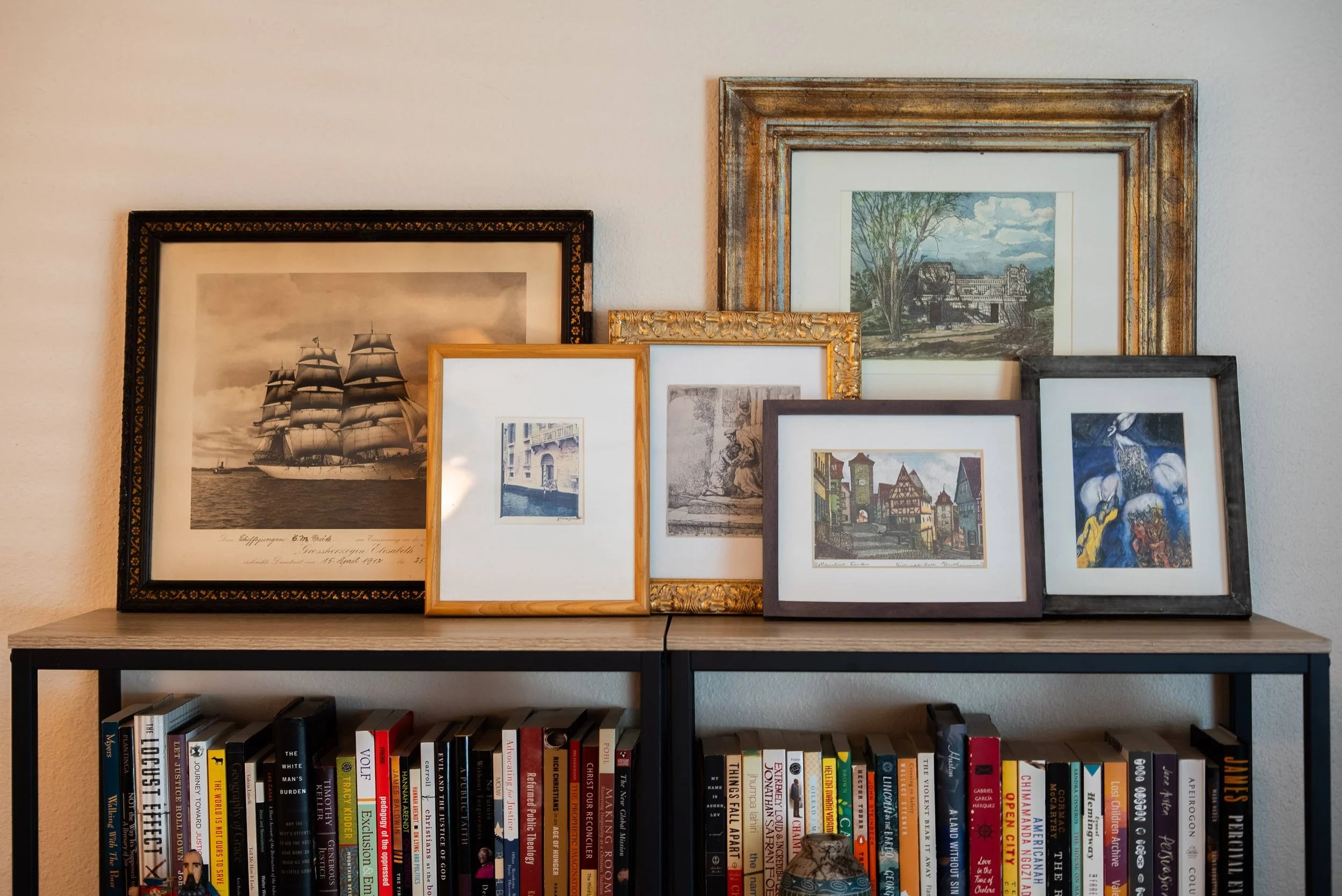
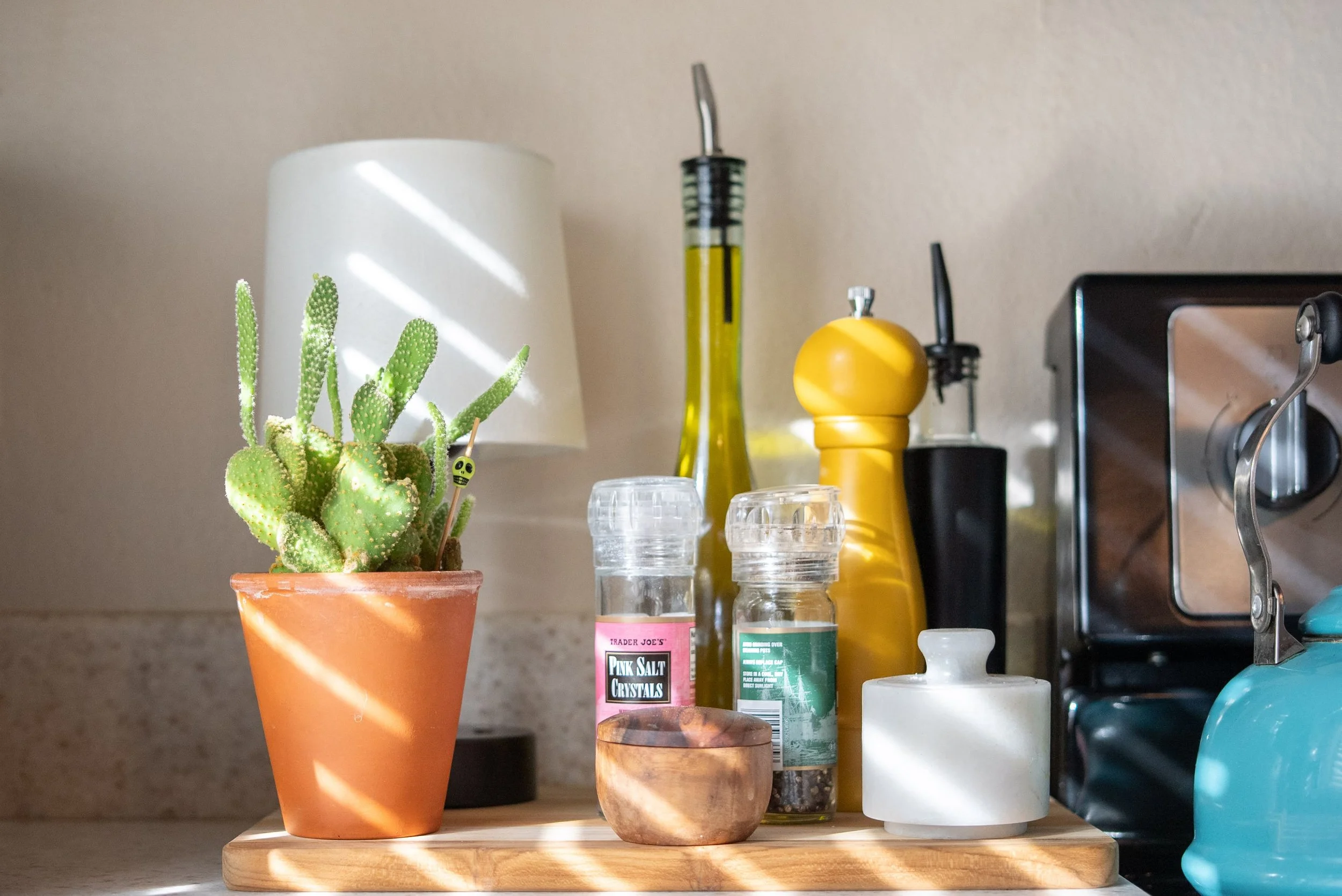
Photos throughout by our immensely talented friend David Trujillo. Book him for your next shoot!