Wrenches and Rothkos
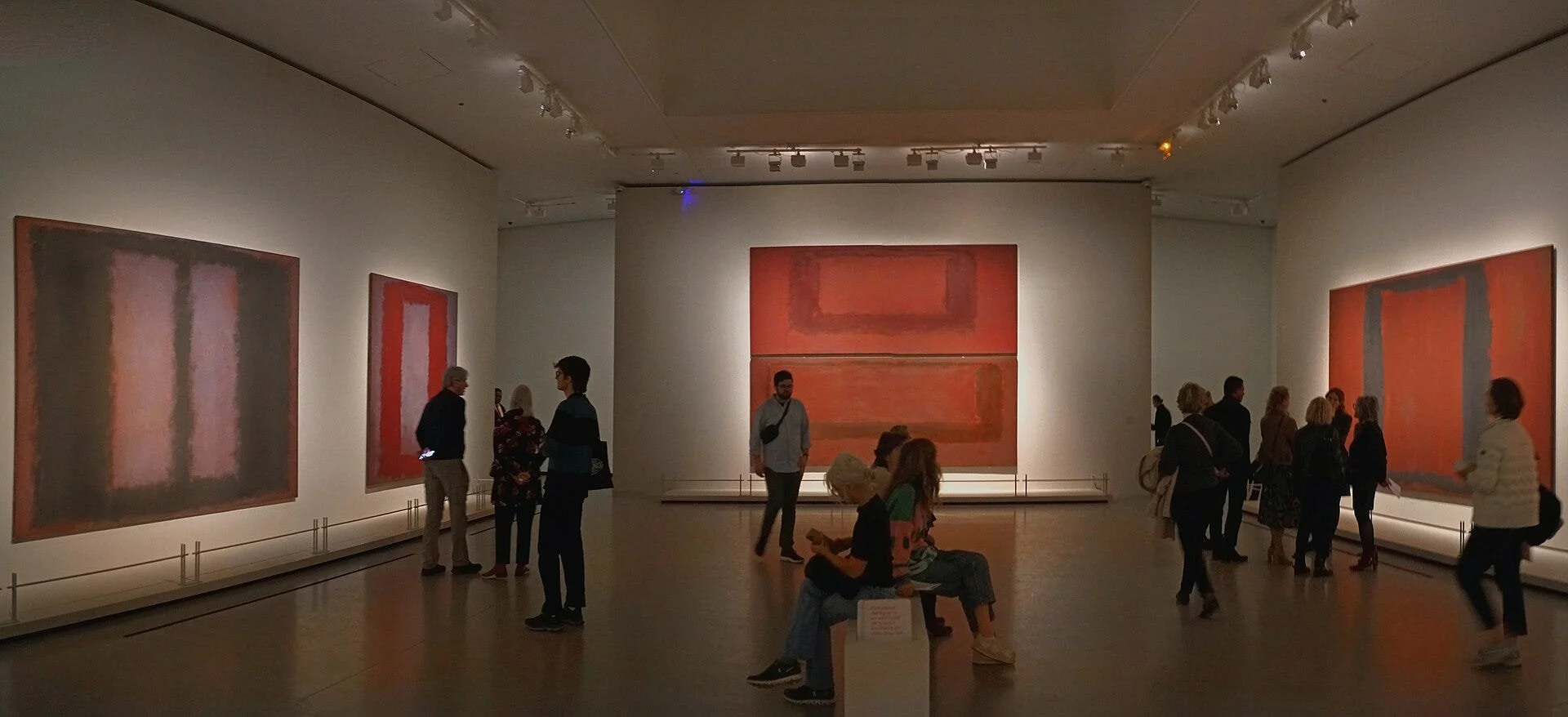
Mark Rothko, Seagram Murals, Fondation Louis Vuitton (via Wikimedia Commons)
The trip wasn’t off to a good start.
Late the evening before, packing mostly done, I settled in for what promised to be a criminally short night of sleep. Drifting off, my phone buzzed. An alert from the airline, informing me that my pre-sunrise flight was to be delayed two hours, “as your crew completes the required rest period to operate your flight.”
No problem, I told myself, I’ll still have plenty of time to get where I need to go. Besides, a couple extra hours of sleep for everyone? Sign me up.
True to form, I tossed and turned all night, periodically checking my phone for further updates, like the one at 4:34 a.m. noting a further delay “as our maintenance team ensures your plane is ready for takeoff.” Something—years of travel, instances of less-than-perfectly-straightforward airline communications—told me the delays would continue to mount. The whole thing felt inauspicious.
+++
I was to fly from San Antonio to Washington, D.C., for The Understory, a first-of-its-kind festival being organized at the National Cathedral by the good people at Comment magazine. The event, scheduled to run from Thursday afternoon to midday on Saturday, was being framed as “a civic and spiritual gathering to rehumanize our common life in a time of cultural fragility.” Quite the agenda, admittedly, for a mere forty-eight hours. But shoot, you’ve got to admire the audacity.
Seasoned traveler that I am, I had planned my day perfectly. I would arrive at Reagan National Airport before eleven and would take the Metro (first the yellow line, then the red) to the Woodley Park Zoo station, just a short walk from the hotel, where I’d leave my bags. Grabbing a quick bite along the way, I’d have plenty of time for a leisurely visit to the Phillips Collection—and its Rothko Room—all before the start of the festival.
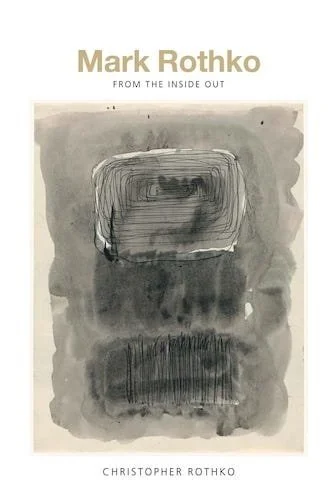
For the past few weeks, I’d been slowly making my way through Mark Rothko: From the Inside Out (Yale), written by his son Christopher, a psychologist who stewards his father’s legacy. The book is a collection of thematic essays, some with oddly unartful titles like “Mark Rothko and Music” and “Mark Rothko and the Inner World.” Interspersed with these essays are others: on the question of whether classic Rothko paintings should be understood as “stacked” (never!); on Rothko’s predisposition to leave his works untitled; and on site-specific projects like the Rothko Chapel in Houston and the Seagram Murals, originally conceived for a bougie restaurant in New York.
“The chief paradox,” the younger Rothko writes of his father’s work, is that “we are faced with art that strives to be universal and communicate at the most basic human level, yet the communication can occur meaningfully only with the individual, and the meaning derived can only be understood on a personal, individual level.”
Thus the painter dreamed of “small chapels dotted throughout the country” where his paintings might be encountered at a human scale—intimate spaces like the Rothko Room, which awaited me.
All I had to do was get there.
+++
At 12:03 p.m.—nearly six hours after our originally scheduled departure—I texted Katie that we’d finally boarded, adding the “raised hands” emoji, blesséd be the name. Flight attendants were readying us for takeoff. Seatbelts? Securely fastened. I unwrapped a piece of spearmint gum. In faith I started chewing it.
Just then the pilot took to the intercom, thanking us for our patience, saying we were almost ready to go, it’s just that someone had only now noticed a leaky hydraulic situation, so they were having a guy take a look.
Ten minutes later we were informed the mechanic did indeed take a look, and that it’s normally an easy fix, it really is, but he didn’t happen to have the specific wrench he needed, so he was going to run back to the maintenance shed to grab a different one, but don’t worry, we’re pros around here, we’ll be flying in no time, no one wants to get there more than we do, your trust matters to us.
I texted Katie again at 12:49 p.m.: “Never took off. Deplaning.”
The decision had been made (wisely if belatedly) to take the vessel out of circulation and offer it some TLC—sparing our lives for the moment, yes, but also leaving the hapless personnel at Gate B8 with the unenviable task of rebooking every last one of us on other, later, flights east.
Round about the time I should have been lost in introspective reverie in the Rothko Room, I found myself in a middle seat en route to Dallas. And at the hour attendees of The Understory gathered to process into the Cathedral nave and its cascading lights to hear Jon Guerra sing “In The Beginning Was Love,” I was being informed my rebooked flight from DFW to DCA was now itself delayed—again due to maintenance concerns, though this time, mercifully, those concerns went undescribed.
When I finally made it to my hotel room, I looked at the time: 11:59 p.m. Still the same day. At least I’d have tomorrow.
+++
“There is no such thing as a good painting about nothing,” Rothko famously said. Pretty rich, you might say, for the guy whose work is thought to be comprised, in his son’s knowing words, of “seemingly empty rectangles.”
But sit with a Rothko long enough, as many of us will attest, and it may surprise you what emerges from the work—and what begins to well up within yourself as well. The younger Rothko gives words to a bit of it here:
The high seriousnessness but also the warmth. The focus on the tragic not as a preoccupation with doom but as a point of contact that bonds us all together. Rothko reminds us repeatedly that he is not an artist who is painting for himself, or simply placing his finer attributes on display. He is making an overture to his viewer. Yes, he believes that he had something to tell the viewer, but that discussion does not start behind the lectern; it begins with a sentiment more akin to “We are not so different, you and me.” And with that he invites us to embark on a journey to explore the (tragic) drama of human life.
+++
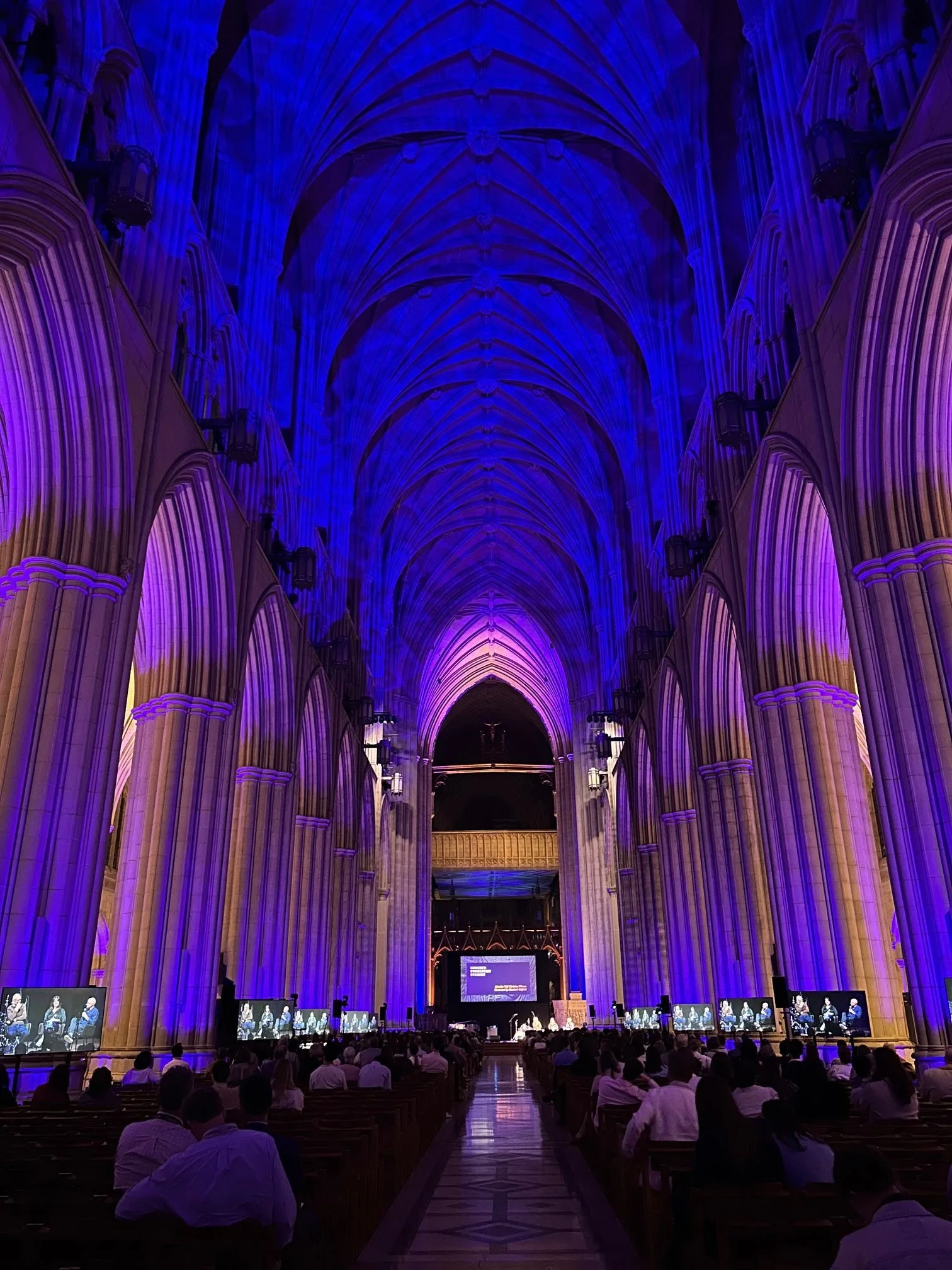
An evening conversation between Miroslav Volf and Christian Wiman, moderated by Elizabeth Oldfield.
The festival itself, once I made it there in the morning, was a joy: expansive plenaries, beautiful performances, thought-provoking breakouts. Most meaningful to me, though, were the truly lo-fi conversations—later I jotted down almost fifty names—with people I knew well, and others whom I was just meeting for the first time.
These friends and acquaintances and colleagues converged, it seemed to me, from dizzyingly disparate worlds. (Walking to dinner on Friday, two friends began to note the overall ideological bent of the gathering—and then proceded to share opposite impressions.) Nonetheless, here we were, together in our nation’s capital, at such a time as this, reckoning with truly profound questions, like this: “How might we rehumanize our common life and renew trust—between persons, and within the institutions that exist and those yet to be born?”
Heady questions. Ideology-busting questions. Impossible questions. But worthwhile ones, all the same.
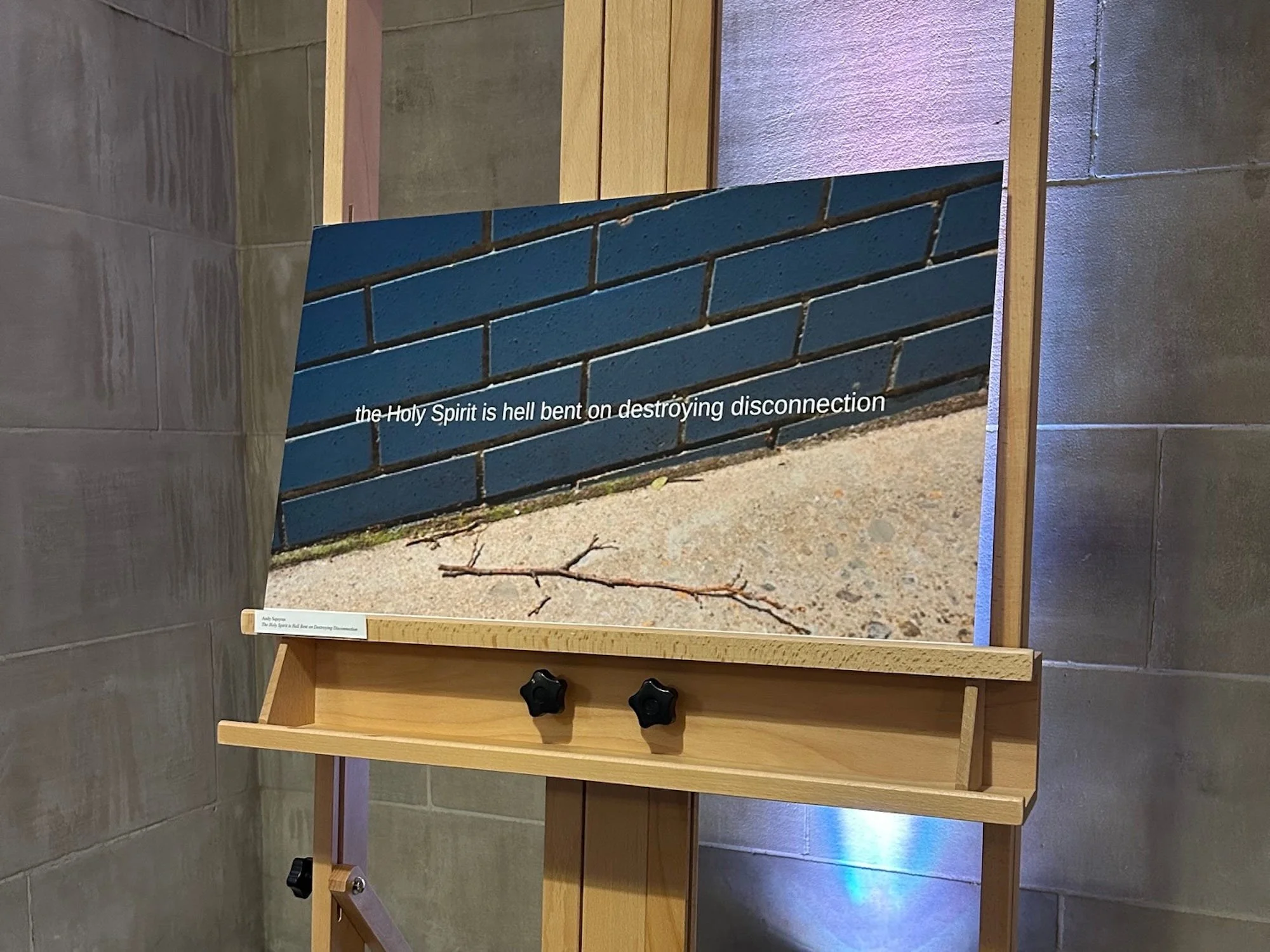
Yep, it’s an Andy Squyres original, folks. In the Cathedral crypt, of all places.
On the final day of the festival, my friend David and I had made plans to sit together at the closing lunch. We hadn’t seen each other in more than ten years; we were long overdue to catch up. But then he texted me with another idea. There’s this museum, he said, called the Phillips Collection. I was thinking of going there before heading to the airport. It’s supposed to be great. Would you want to join?
We slipped out of the festival a bit early. In the Uber, David and I caught up on each other’s lives. We chatted as we walked through the Miró exhibition upstairs, and chatted some more as we meandered back down. Careers and moves, families and fandoms . . . the Monets and the Picassos eavesdropping, as they do so well.
Finally, we came to the Rothko Room—a small, surprisingly dim space with four large canvases, one on each wall: greens and reds and ochres, along with tangerines and maroons. In the middle of the room, a simple wooden bench, put there (we’re told) by Rothko himself. Along with a few others in the room, we fell into a hush. We both had flights to be thinking about, but neither of us checked the time.
+++
“My father understood,” Christopher Rothko writes, “that the role of the artist is to take the familiar in the world around us and transform it into something new, something unexpected, something that makes us look again at what we thought we already knew.”
It strikes me that’s precisely what the good people behind the Understory are up to as well. Inviting us to look at ourselves and our families, our churches and institutions and nations. And then to look again. To ask big, unruly questions—and to remain defiantly open to hopeful surprises.